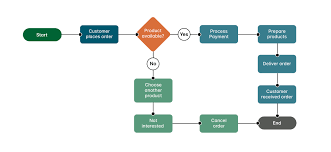

Organizations in the United States are increasingly prioritizing structured workflow analysis and optimization to stay competitive amid growing operational complexity.
Many teams now rely on business process modelling tools to visualize processes, minimize inefficiencies, and standardize operations across functions.
In 2024, the North American business process management market was valued at approximately USD 7.67 billion, driven by early adoption of digital transformation and advanced workflow tools that enable clearer process design and execution.
As businesses scale and evolve, selecting the right modelling platforms becomes essential for efficient workflow design and cross-departmental alignment.
Understanding What Makes a Process Modelling Tool Effective
Selecting the right modelling platform requires understanding what capabilities contribute directly to effective workflow design. The best tools offer a mix of visual clarity, interoperability, and analytical depth.
To differentiate strong modelling platforms, businesses look for the following features:
- Intuitive visual process mapping – A key strength of leading tools is clear process visualization. Intuitive drag-and-drop interfaces help teams build understandable workflow diagrams that reveal dependencies and decision points without extensive coding knowledge.
- Support for standard notations (e.g., BPMN) – Tools that support Business Process Model and Notation (BPMN) and related standards ensure models are interpretable, shareable, and compatible with execution platforms and governance frameworks.
- Collaborative modelling environments – Integrated collaboration features allow stakeholders from different departments to co-author and refine workflow models, fostering alignment and reducing misinterpretation across teams.
- Version control and change traceability – Comprehensive history and versioning features ensure changes to models are documented. This improves governance and allows teams to revert or compare iterations of process design.
- Cross-platform compatibility – Tools that easily integrate with other systems such as workflow automation, analytics, and content management platforms extend the model’s usefulness into execution and evaluation.
Effective process modelling begins with clarity, standards, collaboration, governance, and integration, the capabilities that help bridge design intent with operational reality.
Visual Workflow Design for Cross-Functional Alignment
A central benefit of good modelling tools is enabling teams to create visual representations that improve understanding and alignment between functions.
To enhance alignment with visual workflows, organizations focus on these modelling capabilities:
- Swimlane diagrams for role clarity – Swimlane visualization clearly shows role responsibilities across workflow stages. This helps departments understand handoffs and responsibilities, reducing role confusion and miscommunication.
- Sub-process breakdowns – Complex processes are easier to interpret when broken into sub-processes. Tools that support hierarchical views enable teams to drill down into task-level details without losing the big picture.
- Interactive flow annotations – Adding notes, decision logic, and exceptions directly into models helps stakeholders understand context and assumptions. Interactive annotations reduce reliance on separate documentation.
- Conditional logic visualization – Modelling tools that depict decision points and alternate paths help teams anticipate exceptions and design workflows that handle variability without ambiguity.
- Embedded documentation references – Linking workflows to relevant policy documents, guidelines, or SOPs embeds organizational context within the model. This supports compliance and eases onboarding.
Visual workflow design strengthens understanding across teams and functions, improving coordination, accelerating approvals, and reducing rework.
Using Modelling Tools to Analyze and Optimize Processes
Beyond visualization, effective tools help analyze and refine processes based on measurable performance data.
To drive optimization, organizations leverage these analytical features:
- Performance metric integration – Modelling platforms that integrate metrics such as cycle time and throughput allow teams to quantify process health. This empirical perspective supports targeted improvements.
- Bottleneck detection capabilities – Tools that identify bottlenecks highlight where work slows or queues build. Addressing these hotspots can lead to substantial efficiency improvements.
- Simulation and “what-if” scenarios – Simulation features help teams model potential changes before applying them. This helps evaluate the impact of redesigns without operational risk.
- Process benchmarking support – Comparing similar workflows across teams or business units identifies best practices and areas needing improvement. Benchmarking supports evidence-based decision-making.
- Historical trend analysis – Analytical tools track performance changes over time, enabling teams to confirm whether improvements are sustained and to adjust further as needed.
Analysis and optimization capabilities turn models into actionable insight, driving evidence-based process improvements that boost efficiency and quality.
Integration With Automation and Execution Platforms
Modern workflow modelling extends beyond documentation into execution particularly where automation plays a role in improving consistency and speed.
To connect design with execution, businesses focus on the following integration capabilities:
- Export to automation engines – Tools that export models to execution platforms eliminate replication effort. This alignment ensures workflows run as designed without translation errors.
- API-based connectivity – Integration with other business systems via APIs ensures process models can consume and update real-time data, enabling operational responsiveness.
- Version propagation into execution systems – When models change, integration mechanisms update automation platforms accordingly. This reduces divergence between planned and live workflows.
- Execution monitoring dashboards – Tools that connect models with dashboards help teams compare planned versus actual performance, supporting continuous refinement.
- Low-code/ no-code execution bridges – Platforms that support low-code execution configurations help business users deploy automated workflows without deep technical expertise.
Integration between modelling and execution accelerates deployment cycles, improves consistency, and ensures operational workflows align with strategic design.
Evaluating Tools for Enterprise Readiness and Scalability
Selecting the right platform requires understanding how well a tool supports growth, complexity, and governance needs.
To assess enterprise readiness, organizations evaluate these characteristics:
- Scalability for growing process libraries – Tools that can handle a large number of models and users without performance issues better support enterprise-level complexity.
- Advanced security and access controls – Role-based access ensures sensitive workflow data is protected while enabling controlled collaboration among stakeholders.
- Support for governance and compliance workflows – Built-in audit trails and approval workflows help organizations meet regulatory, quality, and internal control requirements.
- Mobile and remote support capabilities – With distributed teams and hybrid work norms, platforms that support mobile or remote access improve flexibility and adoption.
- Vendor support and ecosystem strength – A strong ecosystem of integrations, documentation, and user communities ensures long-term viability and support as needs evolve.
Enterprise readiness ensures modelling platforms can support complex organizations, enhance governance, and enable scalable workflow design.
Conclusion
Business process modelling tools are fundamental to effective workflow design, enabling organizations to visualize, analyze, and optimize complex operations.
By fostering clarity, supporting cross-functional alignment, enabling data-driven optimization, and integrating with execution platforms, these tools help transform process design from a static activity into a dynamic performance driver.
Evaluating enterprise readiness and scalability ensures modelling platforms support long-term operational evolution rather than short-term gains. As digital transformation accelerates, organisations like Zoho illustrate how flexible, integrable solutions can support workflow design and execution across business functions.
Companies that invest in robust process modelling approaches are better positioned to achieve efficiency, agility, and sustainable growth.