
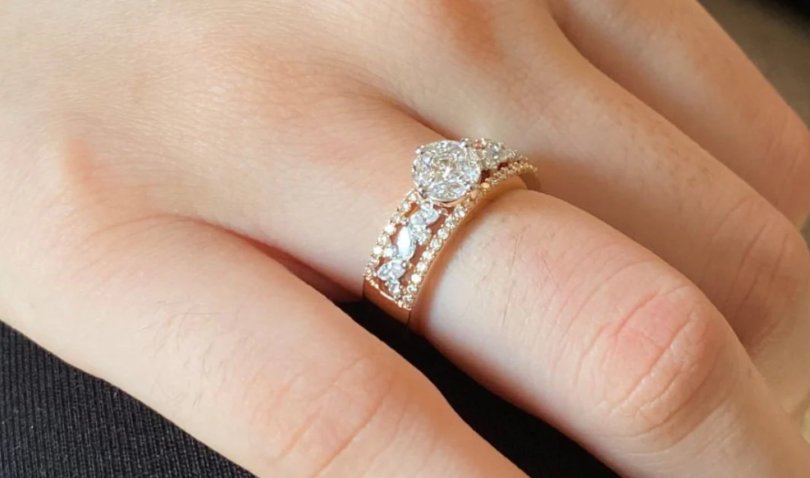

Discovering that a diamond’s original receipt, box, or store documents have been lost can make the idea of selling it feel uncertain. These materials are useful, particularly when they help establish where an item was purchased or confirm its brand history. Their absence, however, does not automatically remove the diamond’s value or prevent a professional evaluation.
A buyer can still examine the jewelry itself. What changes is the amount of background information available and, in some cases, the time required to verify important details.
The Diamond Can Still Be Evaluated
A professional examination begins with the physical characteristics of the stone. The evaluator may consider whether it is a diamond, its approximate carat weight, color, clarity, cut, shape, and current condition.
Carat measures weight rather than visible size. Color describes the degree of tint, while clarity concerns natural internal features and marks on the surface. Cut refers to the proportions and workmanship that influence how the diamond reflects light.
If the stone remains mounted in a ring, pendant, or another setting, certain characteristics may need to be estimated. The metal can influence how color appears, while parts of the diamond may be hidden by prongs or the setting.
Removing the stone should not be treated as an automatic requirement. A qualified professional should explain the reason, cost, and possible risk before recommending that a mounted diamond be taken out.
What the Original Receipt Would Have Shown
A receipt, or proof of purchase, normally records information about the original transaction. It may include the retailer, date, amount paid, model, and a brief description of the jewelry.
Losing the receipt removes one source of purchase history, but it does not alter the diamond’s physical qualities. It is also important to remember that the original retail price is not the same as present resale value.
A retail purchase may have included branding, design, packaging, marketing, store expenses, warranties, and after-sales service. A buyer assessing the piece today will consider its current characteristics, condition, demand, and potential resale market.
The Role of the Original Box
Packaging may contribute to the presentation and completeness of branded, limited-edition, vintage, or collectible jewelry. A buyer interested in the complete branded piece may find the original box, warranty booklet, and product documents useful.
For unbranded jewelry, the absence of packaging may be less significant than the condition and quality of the diamond and setting. The effect varies according to the type of piece and the market in which it may be resold.
A box alone cannot authenticate the jewelry inside it. Packaging can be separated from the original item, so the diamond, craftsmanship, hallmarks, and available records must still be examined.
A Grading Report Is Different from a Receipt
A diamond grading report records the stone’s characteristics at the time it was examined by a gemological laboratory. It may include weight, shape, measurements, color, clarity, cut information, fluorescence, and a report number.
The report is not proof of purchase or ownership, and it does not guarantee a particular selling price. Its value lies in helping the evaluator identify the diamond’s recorded specifications and compare them with the stone being presented.
Some diamonds carry a laser inscription on the girdle, the narrow outer edge of the stone. The inscription may correspond with the laboratory report number, although not every diamond has one and magnification is usually required to see it.
If the paper report has been lost, the number may still appear in an old photograph, email, appraisal, warranty record, or retailer correspondence. When the issuing laboratory offers online verification, that number may help retrieve basic information, although it cannot replace a physical examination.
Alternative Records Can Add Context
When original paperwork is missing, other evidence may help create a more complete picture. An earlier appraisal, repair invoice, warranty, photograph from the time of purchase, email exchange, bank record, model number, or store correspondence may support parts of the item’s history.
These records should not be presented as exact substitutes for a grading report or receipt. They are supporting materials, and each has its own purpose and limitations.
Provenance refers to the documented origin and ownership history of an object. Family stories about an inherited ring or memories of receiving a diamond as a gift may be personally meaningful, but they should be separated from details that can be verified through records.
Before arranging an appointment, learning about selling a diamond without original documents can help an owner identify useful alternative evidence, prepare the jewelry, and understand which details may require further examination.
Record the Jewelry’s Present Condition
Current condition matters because the buyer is assessing the piece as it exists today. Take clear photographs of the complete item, side profile, setting, hallmarks, and visible wear before bringing it to an evaluation.
Hallmarks are small stamps that may indicate metal type, purity, manufacturer, or brand. They can provide useful clues, but they must be considered alongside the construction and condition of the entire piece.
Be open about resizing, replacing prongs, repaired settings, substituted side stones, or other alterations, even when the repair documents are no longer available. Chips, loose settings, scratches, missing stones, and structural wear may influence the offer.
Photographs create a personal record, but they do not prove authenticity and do not replace a formal receipt if the jewelry is left with a buyer for further inspection.
Branded Jewelry May Require More Verification
Missing paperwork can have a greater effect on branded or collectible jewelry than on an ordinary diamond setting. Brand documents, serial numbers, packaging, and purchase history may support authentication and the value of the complete piece.
Without those materials, the buyer may need more time to inspect signatures, hallmarks, craftsmanship, model details, and other identifying features. Some buyers may value the item as a complete branded jewel, while others may focus only on the diamond, secondary stones, and metal that can be independently assessed.
This does not mean undocumented branded jewelry cannot be sold. It means the authentication process may be more complex, and different buyers may reach different conclusions about the value contributed by the brand.
The Diamond and the Complete Piece May Be Valued Differently
The center diamond can have value based on its own measurable characteristics. The complete jewelry piece may also include precious metal, smaller stones, design, craftsmanship, age, brand, and condition.
When original packaging or brand documentation is missing, the effect may be greater on the value of the complete jewel than on the evaluation of the main diamond itself.
Ask the buyer whether the offer includes the center stone, side stones, metal, setting, design, and any brand value. This makes it easier to understand exactly what is being purchased.
Compare Buyers Using the Same Information
Different buyers may specialize in different areas. One may focus on loose diamonds, while another may have customers for branded, vintage, or complete jewelry.
Obtaining more than one evaluation can help reveal how these differences affect an offer. Present the same photographs, records, repair history, and condition information to each buyer so the comparison remains fair.
The highest figure should not be considered alone. Transparency, fees, payment arrangements, documentation, and transaction security are also part of the decision.
If the jewelry must be left for further testing, request a written acknowledgement that describes the item, its condition, the date, the purpose, the expected timeframe, and the person responsible for it.
Missing Documents Do Not Produce One Predictable Result
Incomplete paperwork may extend the evaluation or increase uncertainty, but it does not automatically reduce every offer. The impact depends on the diamond’s quality, the jewelry’s condition, the importance of the brand, the buyer’s expertise, and how much of the missing information can be independently verified.
A new grading report may sometimes be helpful, but it involves time and cost and is not appropriate for every item. A professional can help assess whether obtaining new documentation is likely to be worthwhile.
A diamond can therefore be examined and sold without its original receipt or packaging. The stone’s actual properties and the jewelry’s present condition remain central to the evaluation.
The best preparation is to gather any alternative records, photograph the item, check for report numbers and hallmarks, disclose repairs honestly, and choose a buyer who explains both the inspection method and its limitations. Missing documents may change the process, but they do not erase the value of a genuine diamond.
