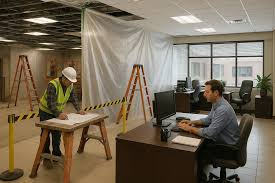

The thought of renovating while customers are walking through the door, staff are trying to work, and operations need to keep running is enough to make any business owner hesitant. Lost revenue, disrupted service, and the logistics of managing a construction site alongside a functioning business are all legitimate concerns. The good news is that closing your doors is not always necessary. In many cases, with the right planning and the right contractor, a commercial renovation can be completed while your business continues to operate.
The Short Answer
Not necessarily. Many commercial renovations can proceed while a business remains open, but the right approach depends on a combination of factors including the scale of the work, the type of business you run, the safety requirements involved, and the impact the construction will have on customers and staff.
There is no single answer that applies to every situation. A small retail refresh is a very different project to a full structural overhaul of a restaurant kitchen, and the approach needs to reflect that difference. The most important thing is to raise this question early with your contractor so the project can be planned around your operational needs from the outset rather than as an afterthought.
Types of Renovations That Can Usually Be Done While Open
Many commercial renovation projects can be carried out without requiring a full closure. Minor fit-outs and refurbishments such as updating flooring, lighting, wall finishes, or fixtures are often manageable while business continues, particularly if the work is confined to a specific area of the premises. Cosmetic updates that do not affect the structural integrity of the building are generally well suited to an open-site approach.
Staged renovations are one of the most effective strategies for keeping a business operational throughout a project. By dividing the work into phases and completing one section at a time, a skilled contractor can ensure that part of the premises remains available for business at all times. Office environments are often good candidates for after-hours or weekend scheduling, where work is completed outside of business hours so staff are not disrupted during the day. Retail spaces can frequently be partially cordoned off while the remainder of the store stays open, particularly if foot traffic can be redirected with minimal inconvenience to customers.
Types of Renovations That May Require a Full or Partial Closure
Some projects are simply not compatible with an occupied premises, and it is important to go in with a clear understanding of when closure is the more appropriate and responsible choice. For a broader look at the range of work that falls under commercial renovations Sydney projects typically involve, understanding the scope helps business owners make more informed decisions about timing and staging.
Structural work such as removing or adding walls, floors, or ceilings generally requires a full or significant partial closure because the disruption to the building fabric makes it unsafe or impractical for occupants to be present. Major upgrades to electrical systems, plumbing, or HVAC infrastructure that affect the whole building also tend to require at least a temporary closure of the affected areas.
Businesses in industries with strict hygiene and safety requirements, including restaurants, medical and dental practices, and childcare centres, may be required to close during certain types of work to remain compliant with their licensing and regulatory obligations. Renovations that generate significant dust, noise, or fumes can also make it unreasonable or unsafe for customers and staff to be present regardless of the physical scale of the work. When the renovation footprint covers the entire premises and there is no viable alternative space from which to operate, closure is usually the most practical solution.
The Role of Staged Renovations in Keeping Your Business Open
A staged renovation is one of the most valuable tools available to business owners who want to keep trading during a refurbishment. Rather than treating the entire premises as a single construction zone, a staged approach divides the project into distinct phases and sequences the work so that usable space is always available.
In a retail environment this might mean renovating one half of the store at a time. In a hospitality setting it could involve taking one section of the dining area offline while the rest continues to serve. In an office it might mean moving staff to one floor while another is refurbished. The trade-off is that staged projects typically take longer than a full-closure renovation, but for many businesses the ability to continue generating revenue during construction more than offsets the extended timeline. Clear and consistent communication with customers and staff throughout the process, along with professional signage and well-managed site boundaries, helps maintain confidence and keep disruption to a minimum.
After-Hours and Weekend Renovations
Scheduling renovation work outside of standard business hours is another effective way to avoid disruption without closing. Evening, weekend, and public holiday scheduling is common in retail and hospitality renovations, and many commercial contractors in Sydney are set up to deliver projects on this basis.
The main consideration with after-hours work is cost. Labour rates for evening and weekend shifts are higher than standard hours, and this needs to be factored into the project budget. However, for businesses where a single day of closure represents significant lost revenue, the premium for after-hours work can be a sound investment. It is also worth checking local council noise restrictions before committing to a schedule, as certain types of construction activity may be limited to specific hours in Sydney depending on the location and the nature of the works.
Health, Safety, and Compliance During an Occupied Renovation
Running a business alongside an active construction site comes with obligations that both you and your contractor need to take seriously. Work health and safety requirements apply regardless of whether the site is fully or partially occupied, and the contractor is responsible for ensuring the construction zone is properly managed at all times.
In practice this means using hoardings, temporary barriers, and clearly marked enclosures to separate construction areas from operational spaces. Dust and debris management is essential, particularly in businesses where cleanliness directly affects customer experience or regulatory compliance. Fire safety requirements including the maintenance of clear emergency exits must be observed throughout the project. If asbestos or other hazardous materials are identified during the renovation, work in the affected area will need to stop until the material is assessed and safely managed, which may require a temporary closure of that part of the premises.
Weighing Up the Cost of Closing Versus Staying Open
The financial case for staying open during a renovation is compelling for most businesses. Lost revenue, ongoing fixed costs such as rent and wages, and the disruption to customer relationships all make full closure an expensive option if it can be avoided. That said, there are situations where a full closure actually makes financial sense. Completing the work faster, avoiding the added complexity of managing an occupied site, and achieving a cleaner result without the constraints of working around an operating business can all justify a planned closure when the circumstances warrant it.
Business interruption insurance is worth reviewing before any significant renovation. Some policies provide coverage for income lost during a period of planned closure, which can change the financial calculation considerably. Speaking with both your contractor and your financial adviser before committing to either approach ensures you have a complete picture before making the decision.
Next Steps
Whether you need to close during a commercial renovation depends on the nature and scale of the work, your type of business, your obligations under relevant regulations, and how well the project is planned from the start. With an experienced contractor, a thoughtful staging strategy, and clear communication with your customers and team, many businesses find they can get through a renovation with far less disruption than they feared. Raise the question early, plan thoroughly, and choose a contractor who has delivered occupied-site renovations before.