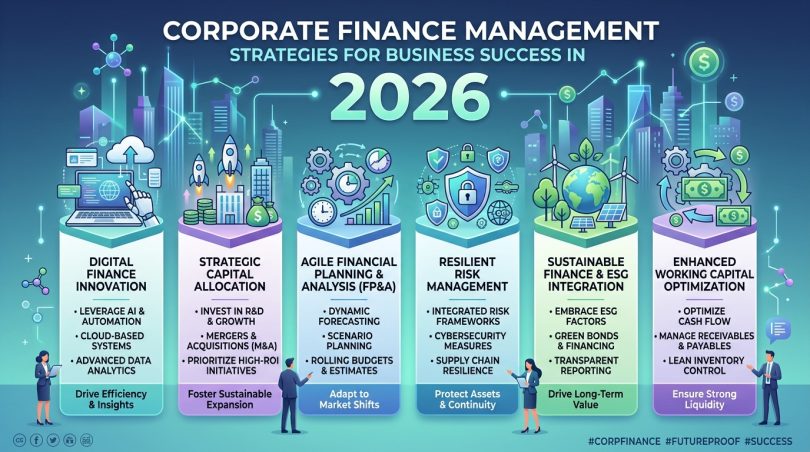

Corporate finance plays a vital role in the success and growth of modern businesses. In 2026, companies are operating in a highly competitive and fast-changing financial environment where effective financial management is more important than ever. From managing capital to controlling expenses and maximizing profits, corporate finance strategies determine how efficiently a business can grow and sustain itself.
With increasing globalization and digital transformation, businesses must adopt smart financial strategies to stay competitive. Corporate finance is no longer just about managing accounts; it now involves strategic planning, investment decisions, and risk management to ensure long-term success.
Importance of Capital Structure Management
Capital structure refers to the way a company finances its operations through debt and equity. Maintaining a balanced capital structure is essential for financial stability and growth. Too much debt can increase financial risk, while too much equity can reduce profitability.
In 2026, companies are focusing on optimizing their capital structure by using a mix of internal funds, loans, and investor capital. This balance helps reduce financial pressure while supporting business expansion.
Effective Cash Flow Management
Cash flow management is one of the most important aspects of corporate finance. It ensures that a business has enough liquidity to cover daily operations, salaries, and other expenses. Poor cash flow management can lead to financial instability.
Modern businesses are using digital tools and automated systems to monitor cash flow in real time. This allows companies to make quick decisions and avoid financial shortages.
Investment Decision Making in Corporations
Investment decisions play a key role in corporate finance. Businesses invest in new projects, technology, infrastructure, and expansion opportunities to increase profitability.
In 2026, data-driven investment decisions are becoming more common. Companies use financial analytics and forecasting tools to evaluate risks and returns before investing in any project.
Cost Control and Profit Maximization
Controlling costs is essential for maintaining profitability in any business. Companies continuously look for ways to reduce unnecessary expenses and improve efficiency.
Profit maximization is achieved when businesses optimize their operations while minimizing costs. Automation, outsourcing, and digital transformation are key strategies used to achieve this goal.
Role of Financial Analysis in Business
Financial analysis helps businesses understand their financial health and performance. It includes analyzing income statements, balance sheets, and cash flow reports.
In 2026, financial analysis is becoming more advanced with the use of artificial intelligence. AI tools help identify trends, risks, and opportunities more accurately and quickly.
Risk Management in Corporate Finance
Every business faces financial risks such as market fluctuations, economic downturns, and operational challenges. Risk management helps companies prepare for uncertainties and minimize losses.
Businesses are now using predictive models and financial simulations to assess risks in advance. This helps in making better strategic decisions and improving financial stability.
Dividend Policy and Shareholder Value
Dividend policy refers to how a company distributes profits to its shareholders. A well-planned dividend policy helps maintain investor confidence and attract new investors.
Companies must balance between retaining profits for growth and distributing dividends to shareholders. This balance is crucial for long-term business success.
Importance of Financial Planning and Forecasting
Financial planning and forecasting help businesses set future goals and allocate resources effectively. It involves predicting revenue, expenses, and market trends.
In 2026, businesses rely heavily on digital forecasting tools to make accurate financial predictions. This helps them prepare for future challenges and opportunities.
Corporate Investment in Technology
Technology investment has become a major focus in corporate finance. Businesses are investing in AI, automation, and digital platforms to improve efficiency and reduce costs.
These investments not only improve productivity but also help companies stay competitive in a rapidly changing market environment.
Long-Term Financial Strategy Development
Long-term financial strategy is essential for sustainable business growth. It involves planning for future expansion, investment, and risk management.
Companies that focus on long-term strategies are more likely to survive economic fluctuations and maintain steady growth over time.
FAQs
What is corporate finance management
It is the process of managing a company’s financial activities, including investment, budgeting, and risk management.
Why is cash flow important in business
Cash flow ensures that a business can meet its daily financial obligations and operate smoothly.
What is capital structure in finance
It refers to the mix of debt and equity used by a company to finance its operations.
How do companies manage financial risk
They use forecasting, analytics, and strategic planning to minimize potential losses.
Why is financial planning important for corporations
It helps businesses set goals, allocate resources, and prepare for future challenges.
Conclusion
Corporate finance management in 2026 is essential for business success and long-term sustainability. With proper strategies such as cash flow management, risk control, and investment planning, companies can achieve financial stability and growth. Businesses that adopt modern financial tools and data-driven decision-making will remain competitive in an evolving global economy.