
Debt management has become a critical part of personal finance in 2026 as more people rely on loans, credit cards, and financing options to meet their needs. While debt can be useful when managed properly, it can quickly become a financial burden if ignored or misused. Effective debt management helps individuals maintain financial stability and work toward long-term financial freedom.
In today’s economic environment, rising expenses and easy access to credit have made debt more common than ever. However, without proper planning and repayment strategies, debt can lead to stress and limit financial growth. Learning how to manage debt wisely is essential for achieving a secure financial future.
Understanding Different Types of Debt
Not all debt is the same, and understanding the difference is important for proper management. Some debts, like home loans and education loans, are considered productive because they contribute to long-term growth. Other debts, such as credit card debt, are often high-interest and more risky.
Identifying the type of debt helps individuals prioritize repayment strategies. High-interest debts should always be handled first, while long-term loans can be managed over a longer period with structured payments.
Importance of Debt Tracking
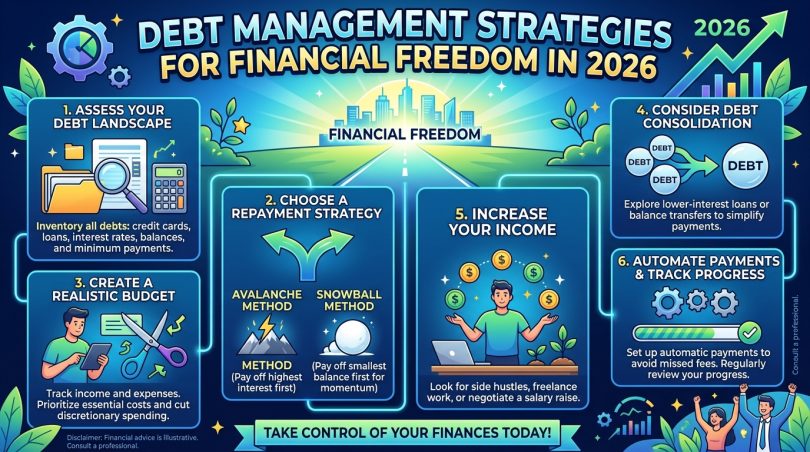
Tracking all debts is the first step toward effective management. Many people lose control of their finances because they do not keep a clear record of what they owe. Debt tracking provides a complete overview of outstanding balances, interest rates, and repayment schedules.
In 2026, digital tools and financial apps make it easier to track debt in real time. These tools help users stay organized and avoid missing payments, which can negatively impact credit scores.
Creating a Debt Repayment Plan
A structured repayment plan is essential for eliminating debt efficiently. This involves listing all debts and deciding how much to pay toward each one every month. A clear plan helps maintain consistency and progress.
One popular method is the debt snowball approach, where smaller debts are paid off first, or the debt avalanche method, where high-interest debts are prioritized. Both strategies help reduce financial burden over time.
Reducing High-Interest Debt
High-interest debt, especially credit card debt, can grow quickly if not managed properly. Reducing this type of debt should be a top priority for financial stability.
Paying more than the minimum amount each month helps reduce interest accumulation. Refinancing or balance transfer options can also help lower interest rates and make repayment easier.
Avoiding New Debt Accumulation
One of the biggest challenges in debt management is avoiding new debt while repaying existing obligations. Continuing to borrow while repaying loans can create a cycle of financial stress.
Developing disciplined spending habits and avoiding unnecessary purchases can help prevent new debt. Budgeting plays an important role in controlling expenses and maintaining financial balance.
Importance of Credit Score Management
Credit score is directly affected by debt management behavior. Timely payments and low credit utilization improve credit scores, while missed payments and high debt levels reduce them.
A good credit score provides access to better loan terms, lower interest rates, and financial opportunities. Managing debt responsibly is essential for maintaining strong credit health.
Consolidation of Debts
Debt consolidation is a strategy where multiple debts are combined into a single loan with a lower interest rate. This simplifies repayment and reduces financial stress.
In 2026, many financial institutions offer consolidation services to help individuals manage multiple debts more efficiently. This approach can make repayment more organized and manageable.
Role of Budgeting in Debt Control
Budgeting is closely linked to debt management. A well-planned budget ensures that income is allocated properly toward expenses, savings, and debt repayment.
Without a budget, it becomes difficult to control spending, which can lead to increased debt. Budgeting helps individuals stay on track and prioritize financial goals effectively.
Psychological Impact of Debt
Debt can have a significant psychological impact, leading to stress, anxiety, and reduced financial confidence. Managing debt effectively helps improve mental well-being and reduces financial pressure.
Having a clear repayment plan provides peace of mind and a sense of control over financial situations. This improves overall quality of life and decision-making ability.
Long-Term Benefits of Debt Freedom
Becoming debt-free offers long-term financial benefits such as increased savings, better investment opportunities, and financial independence. It allows individuals to focus on wealth-building instead of repayments.
Debt freedom also provides flexibility in financial planning, enabling people to achieve personal goals like buying property, starting a business, or retiring early.
FAQs
What is debt management
Debt management is the process of organizing and repaying debts in a structured way to achieve financial stability.
Which debt should be paid first
High-interest debt such as credit card debt should be prioritized first.
How does debt affect credit score
Late payments and high debt levels can lower credit scores, while timely payments improve them.
What is debt consolidation
It is the process of combining multiple debts into a single loan with easier repayment terms.
Can budgeting help reduce debt
Yes, budgeting helps control expenses and allocate funds for debt repayment effectively.
Conclusion
Debt management in 2026 is essential for achieving financial freedom and stability. With proper planning, disciplined spending, and effective repayment strategies, individuals can reduce financial stress and eliminate debt over time. By taking control of debt, anyone can build a stronger financial future and move toward long-term financial independence.