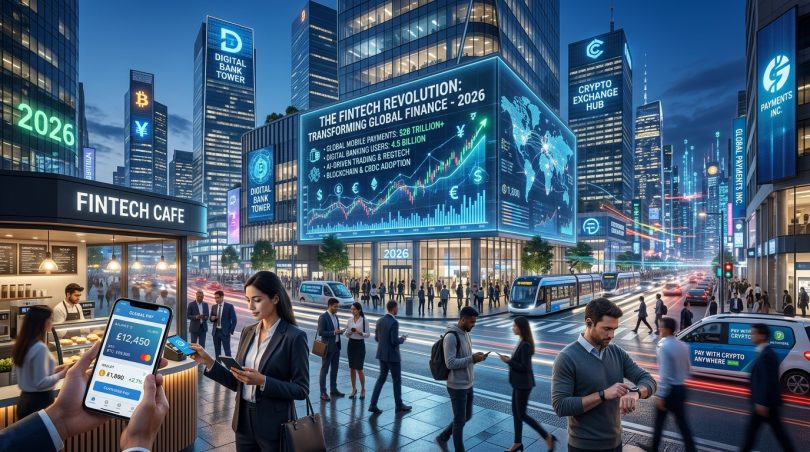

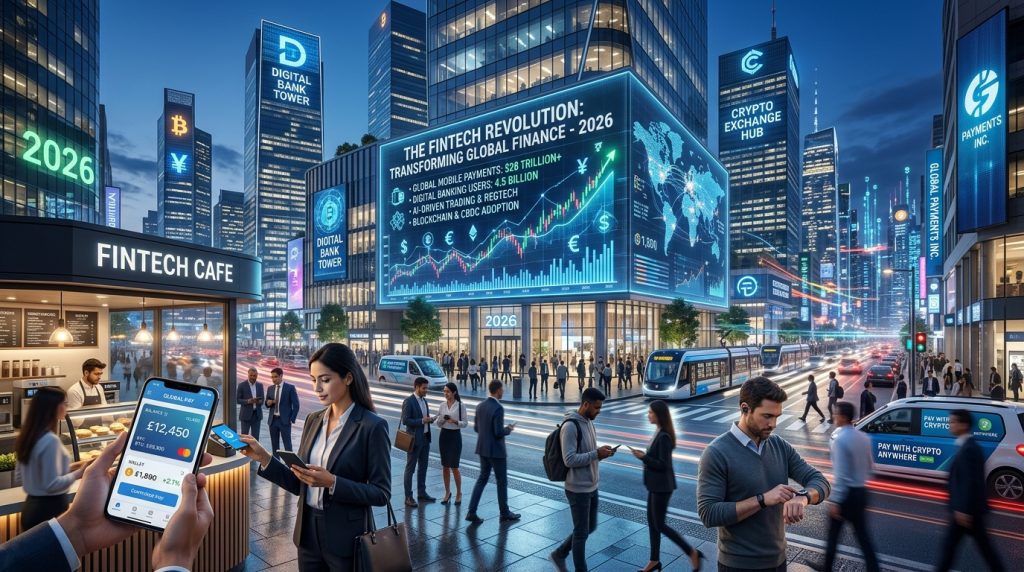
The way money moves at the checkout has changed more in the last five years than in the previous fifty. Cash has faded to a minority habit in most retail settings, cards are increasingly a token inside a phone rather than a piece of plastic, and a payment that once took three days to clear can now arrive in seconds. These digital payment trends are not just conveniences for shoppers; they are quietly rewriting business economics — how fast firms get paid, what payment acceptance costs, and which customers simply walk away when their preferred method is not offered. Understanding the direction of travel helps any business decide where to invest before its customers force the issue.
Instant Payments Become the Default
The biggest structural shift is speed. Real-time payment networks now operate in dozens of countries, letting money move between bank accounts in seconds, at any hour, including weekends. For consumers this means a transfer to a friend settles before the conversation ends. For businesses it means the historic float — the days money spent “in transit” — is disappearing, with real consequences for cash planning. A firm that once waited three days for card settlements can increasingly be paid the same day, which tightens the whole working-capital cycle for firms that plan around it. Governments like instant rails because they are cheap and traceable; banks like them because customers demand them; and fraud teams are adapting to a world where a mistaken or manipulated payment can no longer be recalled at leisure.
The Wallet Ate the Card
Phone-based wallets have become the primary way many people pay in person and online, and the change is generational: younger customers often carry no physical card at all. Tap-to-pay limits keep rising, biometric approval has made wallet payments faster than chip-and-PIN, and merchants who accept only cards now risk losing the sale entirely. Online, the equivalent shift is the one-click checkout button — stored credentials, address, and payment in a single gesture — which measurably reduces abandoned baskets. The strategic point for businesses is that payment is no longer a back-office commodity; it is part of the customer experience, judged as harshly as delivery speed or website design.
Acceptance costs are being reshaped too. Pay-by-bank options, built on open banking, let customers pay directly from their accounts with lower merchant fees than cards, and they are growing fastest in exactly the high-volume, thin-margin sectors that feel card fees most. Subscription businesses, meanwhile, are fighting a quieter battle against involuntary churn — customers lost not because they cancelled, but because a card expired or a payment failed — and are adopting retry logic and account-updater services to recover revenue that used to simply leak away. Underneath all of it sits basic operational discipline: firms that know their numbers, down to how effective asset tracking improves operational efficiency, tend to spot payment leaks months earlier than firms that do not. Professional firms have been through the same reckoning: our look at why medical practices are rethinking how they get paid shows how much income hides in payment process details.
Buy Now, Pay Later Grows Up
Short-term installment credit at the checkout has moved from novelty to infrastructure, and regulators are moving with it — bringing deferred-payment products under consumer credit rules in market after market. For merchants, the appeal is conversion: baskets get bigger and fewer are abandoned when the cost can be spread. For customers, the risk is equally clear: several small “painless” commitments can quietly stack into a real monthly obligation. The mature phase of this trend looks less like a lending free-for-all and more like integration — installments offered inside banking apps, with affordability checks and visibility alongside a customer’s other spending, rather than as a separate impulse at the till.
What Businesses Should Do Now
Speed Cuts Both Ways: Fraud and Trust
Every acceleration in payments has a shadow. Instant transfers settle in seconds and are usually irrevocable, which has made them a favourite tool of fraudsters: the invoice with altered bank details, the “supplier” emailing new payment instructions, the customer manipulated into authorising a push payment to a criminal. Card networks’ slower, reversible model turns out to have been a hidden form of consumer protection, and businesses adopting faster rails need to replace it with process: verify any change of bank details by phone on a known number, separate the person who sets up a payment from the person who approves it, and treat urgency in a payment request as a warning sign rather than a service standard. Customers are making the same calculation from the other side — they choose payment methods they trust, and a checkout that looks careless loses sales no matter how fast it is. The winners of the instant era will be the businesses that pair speed with visible care: clear confirmations, recognisable sender names, and receipts that arrive before doubt does.
Start with an audit: which payment methods do your customers actually attempt, where do payments fail, and how many days pass between a sale and usable cash? Then close the obvious gaps — wallet acceptance online and in person, instant settlement where your provider offers it, and at least one low-cost pay-by-bank route if your margins are thin. Keep an eye on the costs in both directions: the cheapest acceptance method is worthless if customers do not trust or use it, and the most popular one is a tax if its fees keep climbing. Digital payment trends will keep moving, but the winning position is stable: be payable however your customer prefers, get the money fast, and know exactly what each route costs you. The businesses that treat payments as strategy, not plumbing, are the ones quietly compounding the advantage.
One last trend worth watching is what happens at the point of sale itself. Terminals are disappearing into phones — small merchants accepting tap-to-pay on the same device they use for everything else — while larger retailers experiment with checkout-free formats where payment happens invisibly in the background. Each step removes another moment of friction, and each removal raises the premium on the moments that remain: the receipt, the refund, the dispute. Businesses that handle those gracefully will keep the customers that frictionless payment won for them; businesses that treat after-payment as an afterthought will discover that in a one-tap world, switching to a competitor is also one tap. Speed gets the sale. Care keeps it.